
8 Hidden Beaches in Southeast Asia: Local Favorites
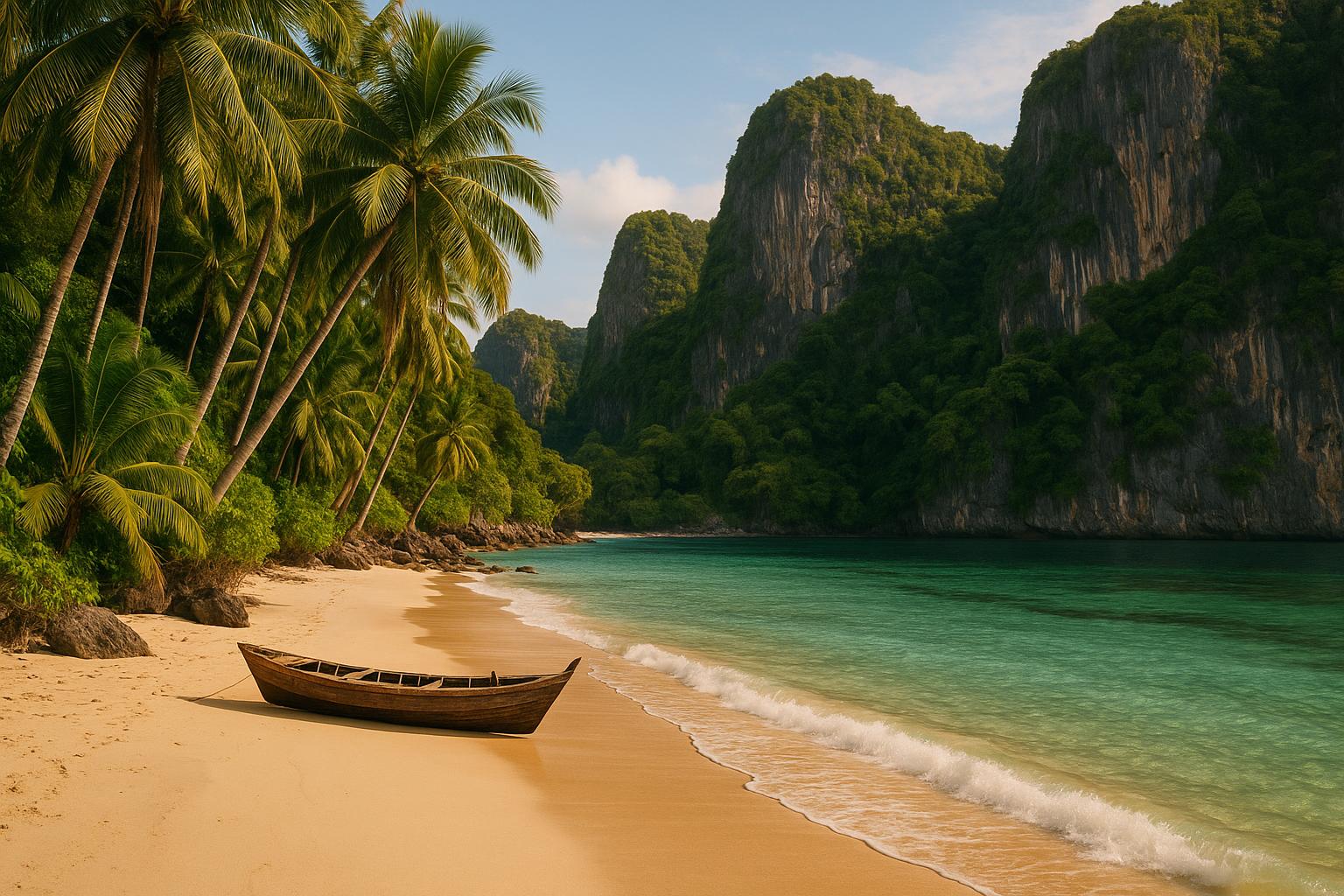
Looking for a tranquil escape? Southeast Asia boasts stunning hidden beaches that combine natural beauty, local charm, and serene vibes. From Cambodia’s Koh Rong Samloem to Thailand’s Koh Kood, these beaches offer crystal-clear waters, soft sands, unique activities, and a chance to unwind away from the crowds. Here’s a quick overview of the top spots:
- Nacpan Beach (Philippines): Known for its Twin Beaches and pristine 2.5-mile coastline. Best visited in February-March.
- Bai Mon Beach (Vietnam): Golden sands and the historic Dai Lanh Lighthouse. Visit between March-September.
- Koh Rong Samloem (Cambodia): Quiet island with snorkeling and jungle treks. Best from November-April.
- Rawa Island (Malaysia): Coral-covered island with eco-friendly resorts. Visit May-September.
- Railay Beach (Thailand): Limestone cliffs and a rock climber’s paradise. Best from October-March.
- Pulau Kapas (Malaysia): Simple island life with snorkeling and kayaking. Visit from March-October.
- Secret Beach (Philippines): Hidden gem accessible by swimming through a crevice. Best from December-April.
- Koh Kood (Thailand): Quiet island with lush greenery and scooter-friendly exploration. Best from December-February.
Quick Comparison
| Beach Location | Best Time to Visit | Unique Feature | Accessibility | Activities |
|---|---|---|---|---|
| Nacpan Beach, PH | Feb–Mar | Twin Beaches | 45 min van from El Nido | Swimming, sunset views |
| Bai Mon Beach, VN | Mar–Sep | Dai Lanh Lighthouse | 35 km drive from Tuy Hòa | Hiking, camping, sunrise views |
| Koh Rong Samloem, KH | Nov–Apr | Saracen Bay, Lazy Beach | 45 min ferry from Sihanoukville | Snorkeling, jungle trekking |
| Rawa Island, MY | May–Sep | 100% coral cover | 30 min speedboat from Mersing | Snorkeling, kayaking, water slide |
| Railay Beach, TH | Oct–Mar | Limestone cliffs, rock climbing | 15 min boat from Ao Nang | Kayaking, rock climbing, hiking |
| Pulau Kapas, MY | Mar–Oct | Roadless, peaceful environment | 10 min ferry from Marang | Snorkeling, kayaking, camping |
| Secret Beach, PH | Dec–Apr | Hidden behind limestone cliffs | Island Hopping Tour C, El Nido | Swimming, photography |
| Koh Kood, TH | Dec–Feb | Quiet, scooter-friendly island | 7–8 hr bus + ferry from Bangkok | Waterfalls, beach hopping |
These beaches are perfect for travelers seeking relaxation, adventure, and a connection to nature. Pack essentials like reef-safe sunscreen, cash, and mosquito repellent, and enjoy these serene coastal escapes responsibly.
The Hidden Beaches of Southeast Asia
1. Nacpan Beach (El Nido, Philippines)
Just 10.6 miles (17 km) from El Nido town center, Nacpan Beach offers a stunning 2.5-mile stretch of pristine coastline. Back in 2016, it even earned a spot as the 10th best beach in the world on TripAdvisor’s rankings.
One of its standout features is the Twin Beaches, where Nacpan connects with Calitang Beach. Together, they form a picturesque peninsula that highlights the raw beauty of the area. This is a place where you can enjoy an unspoiled coastal vibe, far from overdevelopment.
"If you want the best of the area’s attractions while still maintaining a sense of seclusion, a visit to Nacpan Beach isn’t just a day trip – it’s a trip to paradise." – Ben Pastore, Freelance Travel Writer
During the dry season (November–May), temperatures hover between 75°F and 90°F, making it the perfect time to visit. The crystal-clear waters are ideal for swimming, though it’s best to stay near the shore, as waves can occasionally get strong. With its inviting weather and easy accessibility, Nacpan Beach is a must-see destination.
How to Get There
Reaching Nacpan Beach from El Nido town is simple, with several transport options available:
| Transport Type | Cost | Duration |
|---|---|---|
| Shared Van/Minibus | $6.50 one-way / $11 round-trip | 45 minutes |
| Scooter Rental | $6.50–$11 per day | Flexible |
| Tricycle | $18–$27 round-trip | Varies |
Helpful Tips for Your Visit
- Bring cash: There are no ATMs nearby.
- Catch the sunset: Arrive before 5:00 PM for an unforgettable view.
- Pack sun protection: Shade is limited on the beach.
- Best time to visit: February and March tend to have fewer crowds.
Local restaurants near the beach serve a mix of Filipino dishes and international cuisine, with an average Google review score of 9.6 from 577 reviews. Don’t forget the $4 environmental fee, which helps support conservation efforts in the area.
2. Bai Mon Beach (Phu Yen, Vietnam)
Tucked between the Mui Nay and Mui Dien mountains, Bai Mon Beach stretches out as a 1,312-foot (400 m) crescent of golden sand, untouched by large-scale tourism. This serene V-shaped inlet, framed by rocky cliffs, stands as one of Vietnam’s hidden coastal treasures.
"Bai Mon Beach is the perfect place to spend a lazy day with its crescent of golden sand cradled between rolling hills. Often, the only sounds you hear are the steady pull of waves and the faint rustling of tents from overnight campers." – Ingrid Yang, M.D. J.D.
A standout feature of Bai Mon Beach is the historic Dai Lanh Lighthouse, which towers 85 feet (26 m) above one end of the shore. Originally constructed in 1890 by French colonists, the lighthouse was restored in 1995 and has been fully operational since 1997. Its beam reaches an impressive 25 miles (40 km) into the sea, guiding sailors and adding a touch of history to the landscape.
Activities and Best Times to Visit
The beach’s natural beauty and historical landmarks are complemented by a range of activities. The best time to visit is between March and September, when the weather is at its most inviting. Visitors can watch a breathtaking sunrise, take a refreshing swim (though caution is advised due to occasional strong currents), hike up to the Dai Lanh Lighthouse for panoramic views, or camp overnight with local permission.
Getting There and Practical Tips
Bai Mon Beach is easily accessible from two major cities:
- From Tuy Hòa: About 21.7 miles (35 km) north via the scenic coastal road QL29.
- From Nha Trang: Roughly 80.8 miles (130 km) south.
There’s a small entrance fee of around $1.25 (30,000 VND), which includes parking. The facilities are basic, preserving the beach’s natural charm and tranquil atmosphere. The surrounding area also offers opportunities for mountain climbing and exploring the local ecosystem. With its untouched shoreline, historic lighthouse, and peaceful environment, Bai Mon Beach is a perfect retreat for travelers looking to experience Vietnam’s coastline away from the crowds.
3. Koh Rong Samloem (Cambodia)
Just 5 kilometers away from its larger neighbor, Koh Rong, this 9-kilometer-long island is a haven of unspoiled beaches and crystal-clear waters. It’s the perfect spot for those looking to escape the more bustling coastal destinations and enjoy some peace and quiet.
Beach Areas and Activities
Saracen Bay is the heart of Koh Rong Samloem. Its crescent-shaped shoreline, lined with powdery white sand, is simply breathtaking. If you’re after a more secluded experience, Lazy Beach and Sunset Beach are excellent choices. Both can be reached by a scenic 45-minute jungle trek starting from Saracen Bay. The island’s waters are a dream for snorkeling enthusiasts, teeming with colorful marine life just a short swim from the shore.
Getting There and Practical Information
Traveling to Koh Rong Samloem is straightforward. Ferries operate daily from Sihanoukville’s Ochheuteal Pier, and the ride takes about 45 minutes. Here’s a quick comparison of transportation options:
| Service Type | Duration | Cost (Round Trip) |
|---|---|---|
| Speed Ferry | 45–60 mins | $25.00 |
| Boat Taxi (from Koh Rong) | 30 mins | $5.00 |
| Private Long Tail Boat | Flexible | $30.00 (one way) |
Once you’ve sorted out your transportation, planning your stay becomes much simpler.
Essential Tips for Visitors
The ideal time to visit Koh Rong Samloem is between November and April, during the dry season when the weather is perfect for beach outings. Mario Piazza, General Manager at The Royal Sands Koh Rong, shares his perspective:
"I have lived and worked on Koh Rong for nearly three years. I was drawn to the island’s stunning natural beauty and the opportunity to create a world-class resort experience while fostering environmental stewardship. Koh Rong offers a harmonious blend of nature, tranquility and hospitality, a perfect destination for those seeking a peaceful escape."
To make the most of your trip, keep these tips in mind:
- Bring enough cash, as ATMs are hard to find.
- Pack essentials like mosquito repellent and a flashlight for nighttime walks.
- Book accommodations ahead of time, especially during the busy season from November to March.
- Consider visiting during the shoulder season (March to May) for great weather and fewer crowds.
Even with its rising popularity, Koh Rong Samloem has managed to retain its laid-back charm. While Saracen Bay offers basic amenities, the island’s real draw is its natural beauty and the chance to disconnect from the modern world.
4. Rawa Island (Johor, Malaysia)
Next on our journey through Southeast Asia’s lesser-known beach escapes is Rawa Island, a serene retreat off the coast of Malaysia. Located about 9 miles (15 km) from Mersing in Johor, this small coral island is a haven of unspoiled beauty. Stretching roughly 0.6 miles in length, the island features a stunning white sandy beach on one side and dramatic rocky cliffs on the other.
Natural Beauty and Conservation Efforts
Rawa Island, owned by the Johor Sultanate, is a shining example of eco-tourism done right. The island boasts an impressive 100% coral cover, and to protect its delicate ecosystem, motorized water sports are strictly prohibited. This commitment to preservation ensures the island remains a natural treasure for years to come.
How to Get There
Reaching Rawa Island is simple and stress-free. From Mersing Jetty, you can take a speedboat that gets you to the island in about 30 minutes. Tickets for the ride range between $8 and $10 each way. If you prefer a private charter, you can arrange one through your resort. Parking at Mersing Jetty costs approximately $4 per day, making it convenient for travelers driving in. These easy transportation options make the journey as relaxing as the destination itself.
"Rawa Island is paradise simplified – no crowds, no stress, just sun, sand, and sea in their purest form." – SonnySideUp
Where to Stay and What to Do
Rawa Island keeps things intimate with just two resorts: Rawa Island Resort and Alang’s Rawa Resort. Both offer a range of activities, from snorkeling and kayaking to jungle trekking and spa treatments. For a bit of fun, don’t miss the island’s giant water slide – a playful touch in this peaceful setting.
Tips for Visitors
- Bring cash, as there are no ATMs on the island.
- Resorts offer full-board packages starting at around $270, which include meals and basic amenities.
- The island’s limited development – there are no local villages – adds to its tranquil vibe.
- Its lesser-known status helps maintain its pristine condition.
If you’re seeking an escape from the hustle and bustle, Rawa Island offers a secluded slice of paradise where nature takes center stage.
5. Railay Beach (Krabi, Thailand)
Tucked away in Krabi Province, Railay Beach feels like a hidden paradise, even though it’s technically part of mainland Thailand. Surrounded by towering limestone cliffs, this stunning peninsula is accessible only by boat, giving it a tranquil, off-the-beaten-path vibe. It’s a gem that perfectly captures the beauty and charm of Southeast Asia’s coastline.
Natural Wonders and Activities
Railay’s landscape is nothing short of breathtaking. Picture sheer cliffs, powdery white sand, and crystal-clear waters. It’s a haven for rock climbers, boasting more than 700 climbing routes suited for beginners and experts alike. Adding to the peaceful atmosphere, the area is car-free – only walking paths connect its beaches and attractions.
Getting There and Around
Reaching Railay requires a short boat ride from one of three main locations:
| Departure Point | Travel Time | Cost (One-way) |
|---|---|---|
| Ao Nang | 15 minutes | $3 (100 THB) |
| Ao Nam Mao | 15 minutes | $2.50 (80 THB) |
| Krabi Town | 40 minutes | $4.50 (150 THB) |
Note: If you’re traveling after 6:00 PM, expect an additional $1.50 (50 THB) surcharge for evening boats.
Hidden Spots and Local Favorites
Railay is divided into four beach areas, each with its own vibe. West Railay tends to draw the crowds, but if you’re looking for a quieter escape, Tonsai Beach is a local favorite. For nature enthusiasts, early morning walks along East Railay offer a chance to spot Dusky Leaf Langurs, a rare and endangered primate. Each corner of Railay has something special to uncover.
Adventure and Relaxation
There’s no shortage of ways to enjoy Railay’s natural beauty. Here are some must-try activities:
- Kayaking: For $9, you can rent a kayak for two hours and paddle through hidden caves and along dramatic coastlines.
- Cave Exploration: Check out the Diamond Cave (Tham Phra Nang Nai), a limestone wonder, for $6 (200 THB).
- Hiking: Climb up to the Railay Viewpoint for sweeping views of the entire peninsula.
- Beach Hopping: Each beach offers something different – from the mangrove forests of East Railay to the picture-perfect Phra Nang Beach.
For the best experience, plan your visit during the cooler, less crowded hours of the day – early morning or late afternoon, especially between December and April.
sbb-itb-327b800
6. Pulau Kapas (Terengganu, Malaysia)
Pulau Kapas, a small gem off Malaysia’s east coast, stretches just under 2 miles and offers a tranquil getaway. Its name, meaning "cotton" in Malay, perfectly describes the island’s soft, powder-white beaches. This serene spot is all about simplicity and embracing the slower pace of island life.
Natural Beauty and Serenity
Pulau Kapas is a haven of unspoiled beauty. With no roads, cars, or bustling boat traffic, it remains wonderfully untouched. The island is surrounded by crystal-clear waters and connected by jungle paths, making it ideal for quiet walks and exploring its pristine beaches.
Getting There and Logistics
Traveling to Pulau Kapas is straightforward and affordable:
| Item | Cost (USD) | Duration |
|---|---|---|
| Return Ferry Ticket | $8.50 (RM40) | 10 minutes each way |
| Bus from Kuala Lumpur | $9.60 (RM45) | 6–7 hours |
| Budget Flight from KL | $18–20 (RM85–95) | 1 hour |
Booking transportation ahead of time is recommended. If you’re taking the ferry, consider packing motion sickness medication.
Activities and Amenities
Pulau Kapas offers plenty of ways to enjoy its natural surroundings. Snorkeling is a must, with equipment rentals available for just $2–4 per day. If you’re feeling adventurous, rent a kayak for $4–6 per hour and discover hidden coves along the coastline.
Accommodation Options
Whether you’re camping under the stars or looking for a cozy room, Pulau Kapas has options for every budget:
| Type | Cost per Night (USD) | Features |
|---|---|---|
| Camping | $1–3 (RM5–15) | Basic facilities |
| Budget Chalets | $15–17 (RM70–80) | Rooms with fans |
| Mid-range Rooms | $34–40 (RM160–185) | Air conditioning |
Essential Tips
- Best Time to Visit: Plan your trip between March and October to avoid the monsoon season.
- Cash Only: There are no ATMs on the island, so make sure to bring enough cash for your stay.
- What to Pack: Don’t forget reef shoes for navigating rocky areas and mosquito repellent for evenings.
For a quieter experience, aim to visit on weekdays when the island is less crowded. Pulau Kapas is all about simplicity, so leave the hustle of city life behind and immerse yourself in its natural charm.
7. Secret Beach (El Nido, Philippines)
Hidden behind dramatic limestone cliffs on Matinloc Island, Secret Beach is a secluded gem that’s rumored to have inspired Alex Garland’s novel The Beach.
Getting There
Reaching Secret Beach is an adventure in itself. Accessible only by swimming through a narrow crevice, it’s part of El Nido’s Island Hopping Tour C. This tour also takes visitors to other stunning spots like Hidden Beach, Helicopter Island, Matinloc Shrine, and Star Beach. The challenging approach adds to the beach’s sense of mystery and charm.
| Tour Details | Information |
|---|---|
| Duration | Full-day tour |
| Included Stops | 5 locations |
| Equipment Provided | Life jackets |
| Best Time | Early morning (fewer crowds) |
Natural Features
"The Secret Beach is a piece of paradise concealed by the cliffs and is only accessible through a narrow crevice."
The beach’s untouched beauty and secluded location make it feel like a hidden treasure waiting to be discovered. Its serene atmosphere is perfect for those seeking a peaceful escape, but getting there requires some preparation.
Safety and Preparation
Swimming through the tight entrance can be tricky, especially during high tide or rough waters. Tour guides are on hand to assist and provide life jackets for added safety. To make the most of your visit, pack these essentials:
| Item | Purpose |
|---|---|
| Rock Shoes | Protect your feet from sharp rocks |
| Waterproof Camera | Capture stunning underwater views |
| Reef-Safe Sunscreen | Help preserve marine ecosystems |
| Water Bottle | Stay hydrated during the tour |
Environmental Considerations
Since December 2017, El Nido has introduced strict measures to protect its natural beauty. These include:
- A ban on single-use plastics across the area
- A $3.60 (Php200) Eco-Tourism Development Fee
- Visitor limits to safeguard marine ecosystems
Local tour operators stress the importance of responsible tourism. They encourage visitors to avoid touching coral reefs or marine life and to keep a respectful distance from the natural surroundings. These efforts ensure that Secret Beach remains a pristine paradise for years to come.
8. Koh Kood (Trat, Thailand)
Nestled in the Gulf of Thailand, Koh Kood offers a peaceful retreat far from the bustling tourist hubs. With just 1,000 permanent residents, this island – Thailand’s fourth largest – delivers a serene and authentic experience that feels untouched by time.
Natural Beauty and Atmosphere
Koh Kood is all about simplicity and calm. Its charm lies in its pristine beaches, lush greenery, and the absence of heavy commercial development. This is the kind of place where you can truly unwind, surrounded by nature and quiet.
Getting There
Reaching Koh Kood is part of the adventure. Here are your main options:
| Transport Option | Duration | Cost |
|---|---|---|
| Bus + Ferry Combined | 7–8 hours | $25–30 |
| Flight to Trat + Ferry | 4–5 hours | $100+ |
| Private Transfer | 6–7 hours | $130 |
The Boonsiri High Speed Ferry provides a convenient service from Bangkok to Koh Kood for ฿850 (around $25). You can also book combined tickets using the 12Go platform for a smooth travel experience. Be sure to check the seasonal conditions before finalizing your plans.
Best Time to Visit
Timing your visit can make all the difference. Here’s a quick guide:
| Season | Months | Conditions |
|---|---|---|
| High Season | December–April | Dry and pleasant weather |
| Shoulder Season | November, Late April | Occasional rain |
| Low Season | May–October | Limited boat services |
Pick your dates carefully to make the most of Koh Kood’s natural beauty and avoid travel disruptions.
Practical Tips
To explore the island like a local, rent a scooter for ฿250–300 ($7–9) per day. This gives you the freedom to discover hidden beaches, waterfalls, and charming villages at your own pace.
Environmental Considerations
Koh Kood places a strong emphasis on preserving its natural environment. Visitors are encouraged to:
- Use reef-safe sunscreen to protect marine life.
- Dispose of waste responsibly to keep the island clean.
- Support local conservation initiatives.
- Be mindful of their impact on the island’s delicate ecosystems.
Best Times to Visit Each Beach
Knowing when to visit these stunning beaches can make your trip even more memorable. By planning your visit around the seasons and local events, you can enjoy the best weather and catch unique cultural celebrations.
The dry season, which runs from November to April, is the perfect time to explore Southeast Asia’s beaches. Temperatures during this time range from 68°F to 86°F, offering warm and sunny days. Thailand, Cambodia, and Vietnam experience similar weather patterns, while Malaysia’s coasts provide sunshine almost year-round. Water temperatures are consistently pleasant, staying between 77°F and 89°F, making it ideal for swimming, snorkeling, and other water activities.
| Beach Location | Peak Season | Water Temp (°F) | Notable Events |
|---|---|---|---|
| Nacpan Beach, Philippines | Dec – Apr | 81–86 | Pahiyas Festival (May) |
| Bai Mon Beach, Vietnam | Nov – Apr | 77–89 | Mid-Autumn Festival (Sep) |
| Koh Rong Samloem, Cambodia | Oct – Mar | 77–89 | Pchum Ben (Sep/Oct) |
| Rawa Island, Malaysia | May – Sep | 77–89 | Malaysia Day (Sep 16) |
| Railay Beach, Thailand | Oct – Mar | 77–89 | Songkran (mid-Apr) |
| Pulau Kapas, Malaysia | May – Sep | 77–89 | Malaysia Day (Sep 16) |
| Secret Beach, Philippines | Dec – Apr | 81–86 | Pahiyas Festival (May) |
| Koh Kood, Thailand | Dec – Feb | 77–89 | Songkran (mid-Apr) |
While the dry season is the most popular time to visit, the rainy season (May to October) has its perks too. During this period, you’ll enjoy lower accommodation prices and fewer tourists. However, it’s important to stay updated on weather forecasts, as heavy rains can sometimes lead to flooding. For those looking to avoid crowds but still enjoy good weather, the shoulder seasons – April and November – strike the perfect balance.
These seasonal tips, paired with the practical advice in the next section, will help you plan the ultimate Southeast Asian beach getaway.
Tips for Beach Visits
Exploring Southeast Asia’s hidden beaches is a dream come true, but it’s important to do so responsibly. Start by using reef-safe sunscreen to protect fragile marine ecosystems. Packing reusable water bottles and containers is another simple way to reduce plastic waste while enjoying your time by the sea. Beyond caring for the environment, respecting local customs can make your trip even more meaningful.
Sustainable travel isn’t just about preserving nature – it’s also about honoring the local way of life. For example, a sarong can be your best friend. It works as a beach cover-up and doubles as modest attire when visiting temples. Small, thoughtful actions like these show respect for both the environment and the traditions of the communities you visit.
A Quick Guide to Respectful Practices
| Cultural Consideration | Respectful Practice | Why It Matters |
|---|---|---|
| Greetings | Wait for locals to initiate handshakes | Demonstrates cultural sensitivity |
| Photography | Always ask before taking photos | Respects privacy and traditions |
| Temple Visits | Remove shoes and cover shoulders/knees | Reflects religious respect |
| Beach Attire | Dress modestly away from swim areas | Aligns with local values |
Supporting local communities also makes a big difference. Opt for locally owned accommodations and restaurants that prioritize sustainability. When exploring marine life, maintain a safe distance and avoid feeding wildlife – processed foods can harm their health.
Must-Have Eco-Friendly Beach Gear
- Thrive Natural Care Body Mineral Sunscreen ($30)
- S’well Explorer Water Bottle ($45)
- Case-Mate Pelican Marine Waterproof Phone Pouch ($25)
Stick to the "pack in, pack out" principle. Flatten sandcastles and fill in holes before leaving the beach to help protect nesting sea turtles. If diving is on your agenda, choose eco-certified tours that actively support marine conservation efforts.
"As travelers, we have an obligation to be aware of our surroundings and to adapt to them." – Johanna Read, TravelEater.net
FAQs
What should I pack for a trip to hidden beaches in Southeast Asia?
When you’re planning a trip to hidden beaches in Southeast Asia, it’s best to pack smart and light. Opt for breathable fabrics like cotton or linen to help you stay comfortable in the tropical heat. Don’t forget to bring at least two swimsuits – this way, you’ll always have a dry one ready to go.
Protecting yourself from the sun is a must. Pack sunscreen with a high SPF, a wide-brimmed hat, and UV-protective sunglasses to shield yourself from those strong rays.
Footwear matters too. Flip-flops or sandals are perfect for sandy shores, but for exploring rocky areas, you’ll want sturdy shoes. A reusable water bottle is a lifesaver for staying hydrated, and a waterproof bag will keep your electronics and valuables safe from unexpected splashes. Lastly, a small first-aid kit can come in handy for minor scrapes or any little surprises along the way.
How can I visit these hidden beaches responsibly while supporting the environment and local communities?
To explore Southeast Asia’s hidden beaches responsibly, it’s important to tread lightly and respect the local way of life. Start by reducing waste: pack reusable essentials like water bottles, utensils, and shopping bags to steer clear of single-use plastics. Stick to marked trails, use reef-safe sunscreen to protect marine ecosystems, and always clean up after yourself – leave nothing behind but footprints.
Show your support for local communities by shopping at small, family-run stores, dining at locally-owned eateries, and opting for accommodations like homestays or guesthouses. Respect for local customs matters too. Learn a few simple phrases in the local language, dress modestly when necessary, and follow any posted rules or traditions. Thoughtful travel not only helps preserve these stunning destinations but also creates meaningful connections with the communities that make them so special.
What cultural customs should I know about when visiting these hidden beaches in Southeast Asia?
When exploring hidden beaches in Southeast Asia, being mindful of local customs can make your experience more enjoyable and respectful. For instance, public displays of affection, like kissing or hugging, are typically frowned upon, so it’s best to keep such gestures private. While swimwear is perfectly fine on the beach, it’s a good idea to wear modest clothing – like a sarong or cover-up – when you’re heading away from the shoreline or visiting nearby spots.
Another important tip: always take off your shoes before entering homes or temples. This simple act is a widely recognized sign of respect. And don’t underestimate the power of a friendly smile or learning a few basic phrases in the local language – they can open doors to warm and welcoming interactions with the locals. By keeping these practices in mind, you’ll not only enjoy your trip but also show appreciation for the culture and traditions of the region.
Related posts